


5 Signs Your Car Brakes Need a Check-Up in Singapore

Updated: Feb 28
That high-pitched squeal at the traffic light. The grinding sound that makes you wince. On Singapore's busy roads, you can't afford to guess what those noises mean. Worrying if your car is safe is stressful. Wondering about a huge repair bill in SGD is even worse. Your car's brakes are your most important safety system, and ignoring the warning signs is a risk you don't need to take for yourself or your family.
Stop worrying. Get clear answers. This guide cuts straight to the point. We list the 5 crucial signs that your brakes need an expert check-up, right now. You'll learn to spot serious issues-from a vibrating steering wheel to a soft pedal that sinks to the floor. Understand what the problem is, why it's happening, and what to do next. Keep your family safe and your repair costs low. It's that simple.
Key Takeaways
Your car's noises are a warning. Learn what squeals and grinds really mean for your safety on the road.
A pulsing pedal or longer stopping distance isn't normal. Understand why these feelings mean your brakes need immediate attention.
Spot trouble before it starts. See the simple visual clues and dashboard lights that signal a problem.
Your driving style matters. Discover if your daily commute demands more stopping power than your car's stock setup can offer.
Table of Contents Sign #1: You Hear Squealing, Grinding, or Clicking Noises Sign #2: You Feel Vibrations or a Pulsing Pedal Sign #3: Visual Clues and Dashboard Warnings Sign #4: Your Car's Stopping Performance Gets Worse Sign #5: Your Driving Needs More Than Stock Brakes
Sign #1: You Hear Squealing, Grinding, or Clicking Noises
Your brakes should do their job silently. If you start hearing strange noises when you press the brake pedal, your car is telling you something is wrong. These sounds are a built-in warning system. Understanding the basics of how car brakes work makes it clear why ignoring them is a costly mistake that puts your safety at risk.
In Singapore's humid climate, a faint squeal on your first stop in the morning can sometimes be surface rust burning off the rotors. This is normal. But if the noise continues after a few stops, it’s a clear signal to get your brakes checked immediately.
High-Pitched Squealing
This is usually the first sound you'll hear. Most brake pads have a small metal tab called a wear indicator. When your pads are thin, this tab scrapes against the brake rotor, creating that high-pitched squeal. It’s a deliberate design to warn you. It means you need to replace your brake pads soon before more serious damage occurs.
Deep, Harsh Grinding
A grinding sound is a critical warning. It means your brake pads are completely worn away. You are now hearing the sound of metal-on-metal contact as the brake caliper grinds against the rotor. This doesn't just ruin your rotors; it can damage the calipers, turning a simple, affordable pad replacement into a major repair costing hundreds of dollars more.
Clicking or Ticking
A clicking or ticking noise when you apply or release the brakes often points to loose parts. The brake pads might be shifting in the caliper, or the hardware holding them in place could be worn or broken. In some cases, it could be a small stone or debris caught in the system. This needs immediate attention to prevent a component from failing completely.
Don't guess what the sound means. Any noise from your brakes is a reason for a professional check. Stop the problem before it gets worse. Visit us for a free, no-obligation brake inspection and get an honest answer, fast.
Sign #2: You Feel Vibrations or a Pulsing Pedal
When you press the brake pedal, the feeling should be smooth, firm, and consistent. There should be no surprises. If you feel a shuddering, vibration, or pulsing sensation through the pedal or even in your steering wheel, that’s a major red flag. This isn't just an annoyance; it's a critical safety issue with your brakes that demands immediate attention.
This problem is especially common in Singapore. The constant stop-and-go driving and high ambient heat put immense stress on your brake system, accelerating wear and tear on core components like the rotors.
What Causes Brake Pulsation?
The primary cause of that vibrating feeling is almost always your brake rotors (also called discs). Over time, and with heavy use, they can become warped or develop uneven surfaces. Here’s how it happens:
Intense Heat: Heavy braking generates extreme heat. This can cause "hot spots" on the rotor's metal surface, leading to distortion or warping.
Uneven Wear: As the rotor wears down, it can develop slight variations in thickness across its surface.
Loss of Grip: When the rotor surface isn't perfectly flat, your brake pads can't apply smooth, even pressure. They end up grabbing and releasing on the high and low spots, which you feel as a pulse.
Is Rotor Skimming a Solution in Singapore?
Sometimes, yes. Rotor skimming (or machining) is a service where a machine shaves a very thin layer off the rotor's surface to make it perfectly flat again. It can be a very cost-effective solution, often saving you a significant amount compared to a full replacement. However, it's not always an option. Every rotor has a legally mandated minimum thickness for safety. If your rotors are already too thin or severely warped, replacement is the only safe path forward. Our honest technicians will measure them and always recommend the safest, most affordable option for your car.
Why You Shouldn't Ignore Vibrations
A pulsing pedal is more than just uncomfortable; it's dangerous. It significantly reduces your braking effectiveness and can increase your stopping distance, especially at highway speeds or during an emergency. Knowing how to feel for these issues is a key part of road safety, which is why even official vehicle safety questions from transport authorities emphasize checking brake function. Continuing to drive with warped rotors can also cause premature wear on other expensive suspension and wheel components, turning a small problem into a major repair bill.
Don't wait for the problem to get worse. Feel a shudder? Let our specialists diagnose it for free. We offer same-day service to get you back on the road safely and affordably.
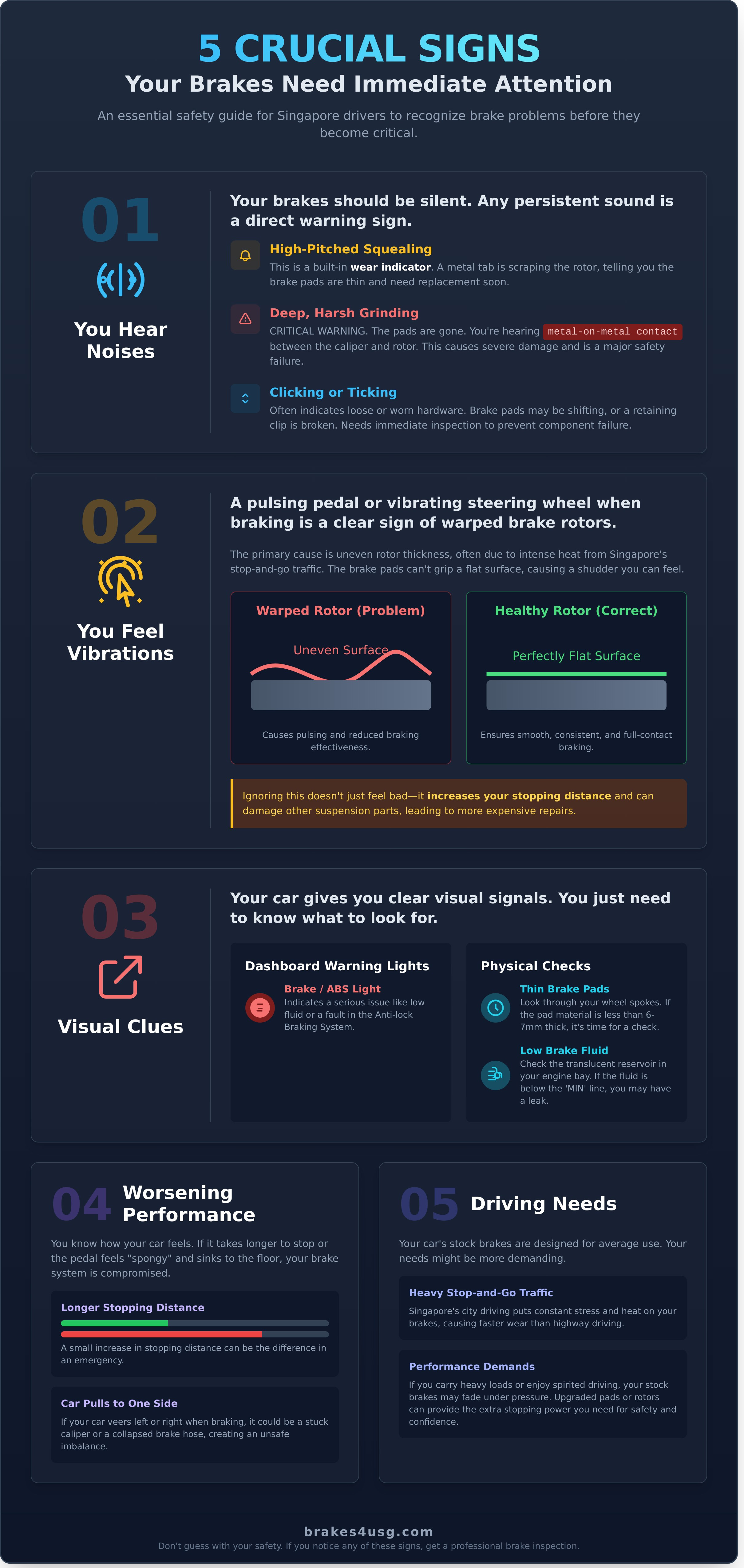
Sign #3: Visual Clues and Dashboard Warnings
Your car often shows you there’s a problem before you hear or feel it. You just need to know where to look. A quick check of your dashboard and wheels can tell you everything about the health of your brakes. These checks are simple. Any car owner in Singapore can do them. Knowing these visual signs of brake problems saves you time, money, and stress. Don't wait for a small issue to become a big, expensive one.
The Brake Warning Light
See a red or yellow light on your dash? It might say 'BRAKE' or show a '(!)' symbol. First, check your handbrake. If it's off and the light stays on, you have a serious problem. This often points to a loss of hydraulic pressure in your brake system. That's a critical failure. Stop driving immediately. Get your car to a specialist. It’s not worth the risk.
Low or Dirty Brake Fluid
Pop your bonnet and find the brake fluid reservoir. It’s a small, clear plastic tank. The fluid should be between the 'MIN' and 'MAX' lines. If it's low, you likely have a leak. Don't just top it up-find the source of the problem. Also, check the colour. Healthy fluid is clear with a slight yellow tint. If yours is dark and murky, it’s contaminated and needs a full flush and replacement to work safely.
Excessive Brake Dust
A little black dust on your rims is normal. But if you suddenly notice one wheel is much dirtier than the others, pay attention. This is a classic sign of a sticking brake caliper. It means one brake is constantly engaged, working harder and wearing out faster. This uneven wear is inefficient and dangerous. It needs to be fixed before it causes more damage to your rotors and pads, costing you more in the long run.
Sign #4: Your Car's Stopping Performance Gets Worse
This isn't about strange noises. This is about how your car feels when you hit the pedal. Over time, your car's stopping power can decrease so slowly you barely notice. But in Singapore's stop-start traffic or during a sudden tropical downpour, that small difference becomes a huge problem.
If your car doesn't stop with the same authority it used to, pay attention. Your safety depends on it. Here’s what to look out for.
Spongy or Soft Brake Pedal
Does your brake pedal feel mushy? Does it sink towards the floor with little resistance? This is a classic sign of air or moisture in your brake fluid. It means the system isn't getting the full hydraulic pressure it needs to work properly. This is a major safety hazard and needs to be fixed immediately.
Car Pulls to One Side
When you press the brake pedal, your car should stop in a straight line. If it consistently veers to the left or right, you have a problem. This usually points to an issue like a stuck brake caliper or a collapsed hose on one side. Your braking force is uneven, making your car unpredictable and dangerous in an emergency stop.
Longer Stopping Distances
You find yourself pressing the pedal harder and earlier just to stop in time. This is often called 'brake fade,' and it’s a clear sign your system is worn out. Your brake pads or rotors are likely too thin to create the friction needed for a quick, safe stop. That extra few metres of stopping distance is critical on busy roads like the PIE or AYE.
Don't gamble with weak performance. If you feel any of these symptoms, your car is telling you its brakes need help. Get it checked. At Brakes4uSG, we provide a Free Brake Inspection to give you peace of mind. No hidden costs, just a straightforward assessment from The Brake Specialists.
Sign #5: Your Driving Needs More Than Stock Brakes
Sometimes the problem isn't broken parts. The problem is that your factory-installed brakes just can’t keep up. Car manufacturers design stock systems for average, everyday driving. They are built for commuting, not for high performance. If you demand more from your car, you need brakes that can handle the pressure.
In Singapore's heat and on demanding roads, pushing your car means generating massive amounts of heat. Stock systems can't handle it. This leads to brake fade-a dangerous loss of stopping power when you need it most. The solution isn't another standard replacement. It's an upgrade.
When to Consider a Brake Upgrade
Standard brakes are not enough if you have pushed your car beyond its factory limits. Think about an upgrade if you:
Regularly engage in spirited driving on expressways like the PIE or KJE.
Participate in track days at Sepang International Circuit.
Have increased your car’s horsepower with engine mods. More "go" needs more "stop."
Benefits of a Big Brake Kit (BBK)
A Big Brake Kit is the ultimate solution for drivers who need serious stopping power. It’s not about looks; it’s about safety and performance under extreme conditions. The benefits are clear and immediate.
Shorter Stopping Distances: Larger calipers and rotors provide superior clamping force, stopping you faster. This is critical for safety at high speeds.
Eliminates Brake Fade: A BBK is designed for superior heat dissipation. The system stays cool under pressure, giving you consistent, reliable performance lap after lap.
Better Pedal Feel: Get precise control and immediate feedback from the brake pedal. This allows for better modulation and more confident driving.
Choosing the Right Upgrade in Singapore
Getting a brake upgrade is a serious investment in your vehicle's safety. Proven performance is key. That’s why we rely on world-class brands like Brembo and AP Racing. However, the best parts in the world are useless without correct installation. Expert fitting is non-negotiable to guarantee performance and safety.
Don't settle for brakes that can't handle your driving style. Ready for ultimate stopping power and peace of mind? Explore our Brembo upgrade kits.
Don't Wait. Get Your Brakes Checked Today.
Strange noises, a shaky pedal, or longer stopping distances are not just annoyances. They are clear warning signs from your car's brakes. Ignoring these signals is a risk you can't afford on busy Singapore roads. Your safety, and the safety of others, depends on it.
We make fixing it simple. As an Authorised Brembo Upgrade Dealer, we use only 100% genuine performance parts for every job. You get expert installation from specialists at our Kaki Bukit workshop. No guesswork. No hidden fees. Just guaranteed safety and performance you can trust.
Stop the worry. Drive with confidence. We'll handle the rest.
Frequently Asked Questions About Car Brakes
How often should I get my brakes inspected in Singapore?
In Singapore's stop-and-go traffic, your brakes work hard. We recommend a professional inspection every 10,000 km or at least every six months. This quick check ensures your pads and rotors have enough life left and can prevent bigger, more expensive problems down the road. Don't wait for a warning sign. At Brakes 4 Less, we offer a Free Brake Inspection to give you total peace of mind without spending a cent.
Can bad brakes cause my car to fail its LTA inspection?
Yes, absolutely. Faulty brakes are a primary reason for failing the LTA vehicle inspection. LTA inspectors specifically test braking efficiency. Worn-out pads, scored rotors, or leaking brake fluid will lead to an immediate failure, costing you time and re-inspection fees. Get ahead of the problem. We are The Brake Specialists and guarantee our work will pass inspection, saving you the hassle and extra cost.
What's the difference between OEM and aftermarket brake pads?
OEM (Original Equipment Manufacturer) pads are the exact parts your car was built with at the factory. Aftermarket pads are made by other companies. They often provide better value and can even offer performance benefits like less dust or stronger stopping power. We stock a wide range of quality aftermarket options to fit your budget and driving needs. Our specialists help you choose the right part for your car, with no confusing jargon or upselling. This need for expertise is true for all vehicle types; for instance, you can learn more about Diego's Shop to see the value of specialized diesel repair.
How much does a typical brake pad and rotor replacement cost in Singapore?
For a standard car in Singapore, replacing the brake pads and rotors on one axle typically costs between S$300 and S$600. The final price depends on your car's make, model, and the quality of the parts you choose. At Brakes 4 Less, we provide a clear, upfront quote before starting any work. No surprises and no hidden fees. We offer affordable packages to get you back on the road safely and quickly.
Is it safe to drive my car if the brake warning light is on?
No. A brake warning light is a critical safety alert that you must not ignore. It can indicate dangerously low brake fluid, a hydraulic leak, or completely worn-out brake pads. Continuing to drive is a major risk to you and others on the road. Pull over safely and get your vehicle inspected immediately. In any roadside emergency, from mechanical failure to being locked out, having a reliable specialist is key; for example, drivers in Brașov rely on services from Expert Deblok for urgent locksmith needs. We offer Same Day Service to diagnose brake issues and provide a fast, affordable fix to ensure your safety.
Why are genuine brake parts from brands like Brembo worth the investment?
Premium brands like Brembo are an investment in superior safety, performance, and durability. They use higher-quality materials engineered for shorter stopping distances, better heat management, and a longer lifespan. While the upfront cost is higher, their reliability provides unmatched performance and peace of mind, especially for performance vehicles or drivers who demand the absolute best. We can advise if a premium upgrade is the right value choice for your car.


Comments