


Brake Inspection Checklist: The Singapore Driver's Guide for 2026

Updated: Mar 17
Stuck in peak hour traffic on the PIE, you hear it. That high-pitched squeal every time you tap the brakes. Or maybe it’s the steering wheel shuddering as you slow down from 90 km/h on the AYE. It’s a sound that costs you peace of mind. And maybe a lot of money.
You're right to be concerned. Those noises aren't just annoying; they're your car's warning system. Ignoring them is a gamble, especially with Singapore's stop-start traffic and unpredictable weather. You need to know exactly what's wrong, without the dealership runaround or confusing mechanic jargon.
This is your solution. We’ve built a professional-grade 7-point brake inspection checklist specifically for Singaporean drivers. It gives you the power to check your own brakes, understand the signs of wear, and even learn why our 88% average humidity can ruin your brake fluid faster than you think. No fluff. No hidden costs. Just clear, actionable steps.
Follow this guide to gain total confidence in your car's stopping power, whether you're on a family trip to Jewel or pushing the limits on a track day.
Key Takeaways
Understand how Singapore’s humidity ruins brake fluid and why regular checks are non-negotiable for your safety.
Use our professional 7-point brake inspection checklist to spot common wear like thin pads and scored rotors before they become a major problem.
Learn to tell the difference between a minor squeal and a dangerous grinding noise so you know exactly when to see a specialist.
Get specific checks for high-performance brakes like Brembo, essential for track day safety and reliability.
Table of Contents Why a Brake Inspection Checklist is Critical in Singapore The Essential 7-Point Brake Inspection Checklist Performance & Track Day Inspection: Beyond the Basics Warning Signs: When to Skip the Checklist and See a Specialist Professional Brake Inspection at Brakes4uSG Kaki Bukit
Why a Brake Inspection Checklist is Critical in Singapore
Your brakes aren't a suggestion. They're a necessity. In Singapore, a regular check is non-negotiable. Between the 80% average humidity and the daily gridlock on the Pan Island Expressway (PIE), your car's brakes work harder here than almost anywhere else. Don't wait for a warning light or a scary noise from your wheels.
A proper brake inspection isn't just a quick look. It’s a systematic review of your entire braking system to catch problems before they become dangerous failures. A good mechanic uses a brake inspection checklist to guarantee nothing is missed. This includes a detailed look at:
Brake Pads: Checking for wear thickness.
Brake Rotors (Discs): Inspected for warping, scoring, or heat spots.
Brake Fluid: Tested for moisture content and contamination.
Calipers and Hardware: Ensuring they move freely and aren't seized.
Passing your mandatory LTA inspection isn't guaranteed. Worn-out brakes are one of the top reasons for failure, immediately taking your car off the road until it's fixed. Understanding the basics of how brake systems work makes it clear why every single part is vital for your safety and for staying compliant with Singapore's road regulations.
The Impact of Tropical Humidity on Brake Fluid
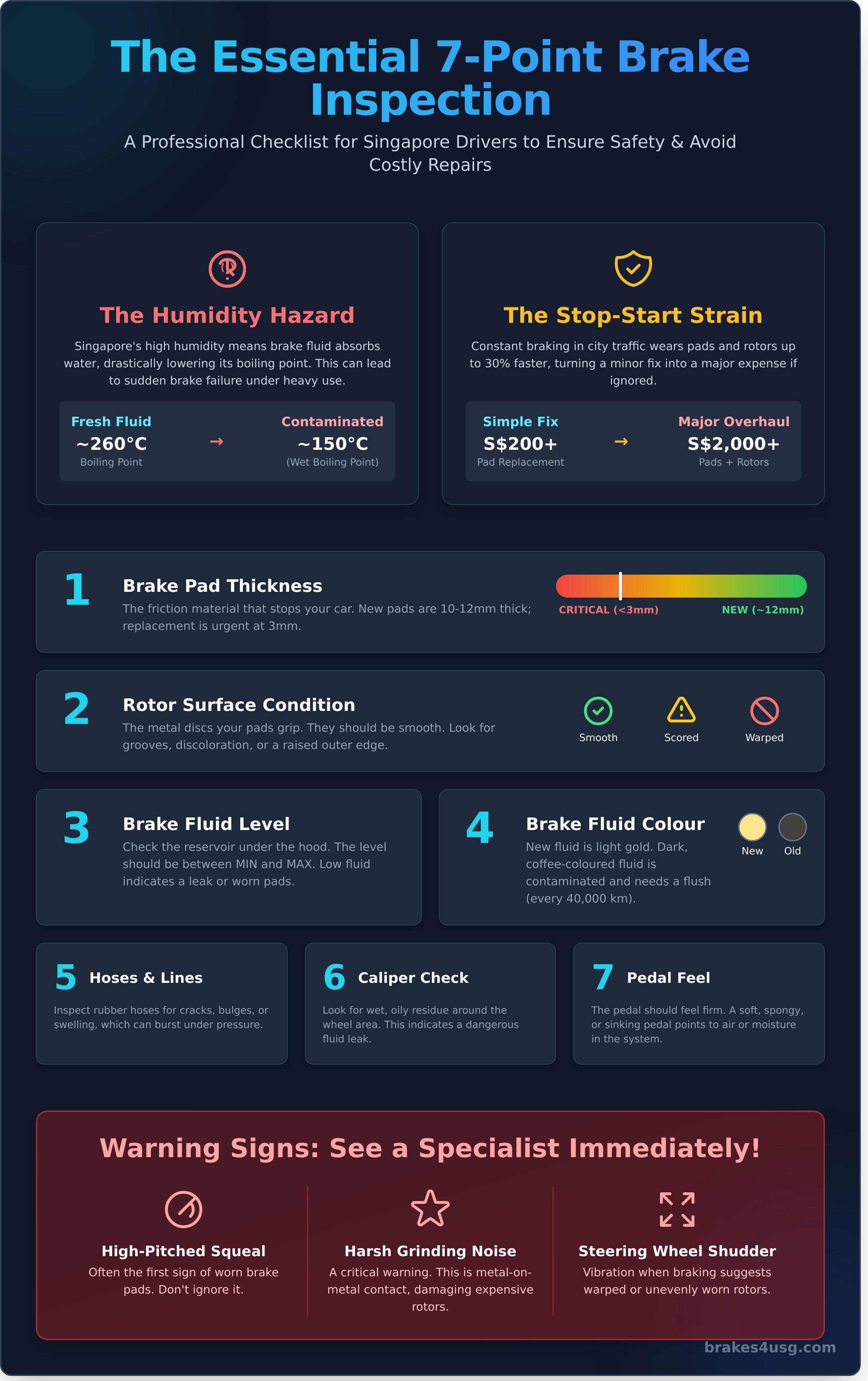
Singapore's air is full of water, and your brake fluid absorbs it like a sponge. This is because brake fluid is hygroscopic. This water contamination is a silent killer for your braking performance, as it drastically lowers the fluid's boiling point. Under hard braking, this water can turn to steam, creating air bubbles in the lines and causing your brake pedal to feel soft or go straight to the floor. The 'wet boiling point' is the temperature at which brake fluid with just 3.7% water content boils, a critical safety threshold that, once crossed, can lead to total brake failure in an emergency.
Driving Habits and Brake Longevity
Forget long, easy highway cruises. Your daily drive is likely a stop-start crawl on the Central Expressway (CTE). This constant braking is brutal on brake pads and rotors, wearing them down up to 30% faster than in gentler driving conditions. Neglecting this accelerated wear is a costly mistake. What starts as a simple S$200 brake pad replacement can quickly wear down and destroy your rotors. Suddenly, you're looking at a S$2,000 bill for a full brake overhaul. Don't let that happen.
Your brakes are your car's most important safety feature. No question. Using a thorough brake inspection checklist is the smartest, most affordable way to ensure they're ready to perform when you and your family need them most. It's the best insurance you can buy for peace of mind on the road.
This level of attention isn't just for passenger cars. The same principles of wear and safety apply even more critically to heavy vehicles like trucks and trailers. For those managing commercial fleets, ensuring a reliable supply of high-quality components is paramount, and online specialists like Truckparts Corner can be a vital resource for keeping their vehicles road-safe.
The Essential 7-Point Brake Inspection Checklist
You don't need to be a mechanic to spot trouble. A good visual check can save you hundreds of dollars and prevent a serious accident. This isn't about guesswork; it's a systematic process. The goal is to follow a consistent brake safety inspection process to catch problems early. Use this simple brake inspection checklist to see if your car needs professional help. Fast. Simple. Safe.
Here’s what our specialists look for. You can, too.
Brake Pad Thickness: Your pads are the first line of defense. New pads are about 10-12mm thick. The danger zone is 3mm. Anything less is a critical safety failure waiting to happen.
Rotor Surface Condition: The metal discs your pads squeeze. They should be smooth and even. Look for deep grooves (scoring), a raised outer edge (lipping), or blueish heat spots.
Brake Fluid Level: Pop the bonnet. Find the brake fluid reservoir. The fluid should be between the MIN and MAX lines. Low fluid means a leak or worn pads.
Brake Fluid Colour: New fluid is a light gold. Old fluid looks like dark tea or coffee. This means it has absorbed moisture, which can cause your brakes to fail under heavy use. A fluid flush is needed every 40,000 km.
Brake Hoses and Lines: Check the rubber hoses leading to each wheel. Look for cracks, swelling, or bulges. These are weak spots that can burst under pressure.
Caliper Check: Look for any signs of brake fluid leaking around the wheel. A wet, oily residue on the caliper is a major red flag.
Pedal Feel: Does your brake pedal feel soft or spongy when you press it? Does it sink to the floor? This points to air or moisture in the hydraulic system. Not good.
Inspecting Pads and Rotors
You can often check pad thickness without removing the wheel. Use a torch and look through your wheel spokes at the brake caliper. You’ll see the brake pad pressed against the metal rotor. If the friction material looks thinner than the metal backing plate, it's time for a change. Also, check the rotor surface. A shiny, mirror-like finish, known as 'glazing,' is caused by overheating. It severely reduces friction and stopping power. Disc skimming can sometimes restore a flat surface, but only if the rotor is above its minimum thickness specification.
Hydraulics and Hardware
A 'spongy' pedal is your car telling you something is wrong with the hydraulics. Air has likely contaminated the brake fluid, which is compressible and ruins brake performance. In Singapore’s hot, humid climate, rubber brake hoses degrade faster, becoming brittle and prone to cracking. Another hidden issue is seized slider pins on the caliper. These pins must be clean and lubricated to allow even pressure on the pads. If they stick, one pad wears out twice as fast. If your own check reveals any of these issues, our free professional brake check can give you a clear diagnosis in minutes.
Performance & Track Day Inspection: Beyond the Basics
Your daily drive on the PIE isn't the same as a hot lap at Sepang. High-performance brake systems demand a higher level of scrutiny. A standard check is not enough. For cars with Brembo, AP Racing, or other big brake kits (BBKs), your brake inspection checklist needs to be more aggressive. These systems operate at temperatures exceeding 500°C, where small issues become big failures. Fast.
Forget a quick glance. You need to look for specific stress indicators. Heat checking is a key one. These are the tiny, spiderweb-like cracks that appear on a rotor's surface after intense heat cycles. While minor surface checking is normal on cross-drilled or slotted rotors, you must inspect them closely. If any crack connects two drill holes or extends to the outer edge of the rotor, that rotor is compromised. It needs immediate replacement. No excuses.
Pad wear is also different. Multi-piston calipers, like a 6-piston Brembo, can cause 'pad taper'. The leading edge of the brake pad wears down faster than the trailing edge. A visual check might look fine, but if you measure, a difference of over 2mm means uneven pressure and reduced stopping power. Finally, check the bedding-in status. A properly bedded-in rotor has a uniform, light grey film of pad material. Splotchy, uneven deposits mean the pads and rotors aren't properly matched, and you won't get the bite you paid for.
Big Brake Kit (BBK) Specific Maintenance
BBKs aren't just for show. They need specialist care. Your mechanic must check that all pistons in a multi-piston caliper move together. If one piston sticks, you get pad taper and dangerous brake pull. For 2-piece floating rotors, check the bobbins connecting the iron rotor to the aluminum hat. They should have a slight rattle when cold. If they're seized solid or excessively loose, the rotor can't expand and contract correctly, risking warpage or failure.
Preparing for the Track (Sepang Ready)
Track days kill standard brake fluid. The typical DOT 4 fluid boils around 230°C. That's not enough for repeated hard braking into Sepang's Turn 1. You need a high-performance fluid like DOT 5.1 or a racing fluid with a dry boiling point over 300°C to prevent brake fade. Before you go, a full system flush is non-negotiable. After your track day, a post-session inspection is just as critical. We check for boiled fluid (it will look dark and murky), deep scoring on rotors, and any signs of component fatigue. Don't risk your safety. Get it checked by The Brake Specialists.
Warning Signs: When to Skip the Checklist and See a Specialist
A routine check is smart. But some brake problems are emergencies. They are your car’s way of screaming for help. If you notice any of these signs, don't just rely on a simple brake inspection checklist. You need an expert opinion. Fast. Ignoring these warnings can turn a S$150 repair into a S$600+ disaster, or worse, cause an accident.
Common Brake Noises and Their Meanings
Your ears are your first line of defense. Brakes should be almost silent. When they start making noise, they're telling you something is wrong. Listen carefully.
High-Pitched Squeal: This is often the built-in wear indicator. It’s a metal tab telling you the brake pads are thin. Get them checked now to avoid rotor damage. A constant squeal could also mean glazed pads from overheating, which reduces stopping power by up to 30%.
Deep, Metal Grinding: This is an emergency. Stop driving. The grinding means your brake pads are completely gone. Now it's metal-on-metal, with the caliper destroying your brake rotor. This is a dangerous and expensive failure.
Clicking or Clunking: A sharp click when you press or release the brake pedal often points to loose hardware. It could be a shifting brake pad or a caliper mounting issue. It’s a sign that your brake system isn't secure.
Vibration and Pulling Issues
You shouldn't just hear problems; you can feel them, too. Pay attention to how the car behaves when you brake. If it feels wrong, it is wrong. A regular brake inspection checklist is for maintenance, but these symptoms are alarms that require immediate attention.
Does your car pull sharply to one side when you brake? This is a classic sign of a seized brake caliper. One of your brakes is working much harder than the other, creating a dangerous imbalance. On Singapore's wet roads during a downpour, this can easily cause a skid. It's not something that will fix itself.
A shudder or vibration through the steering wheel or brake pedal is called 'judder'. Many drivers mistake this for a wheel alignment or balancing issue. It's not. Judder is caused by uneven wear on your brake rotors, also known as 'warping'. Skimming the rotors can sometimes fix this for around S$60 per rotor, but if the damage is too deep, you'll need a full replacement. Don't let a general workshop misdiagnose the problem and charge you for unnecessary services.
There are other clear danger signs. A red or yellow brake warning light on your dashboard is a direct order from your car's computer to get service immediately. See a puddle of clear, yellowish fluid under your car? That could be brake fluid. A leak means a total loss of braking power is possible. Finally, trust your nose. A sharp, burning smell after hard braking means your brakes are overheating. This can damage pads and fluid, severely compromising your ability to stop.
These are not suggestions. They are critical warnings. Your safety is on the line. Don't wait for the problem to get worse. Let our specialists give you a free, no-obligation brake check today. We'll tell you exactly what's wrong, how much it costs to fix, and get it done the same day.
Professional Brake Inspection at Brakes4uSG Kaki Bukit
Your driveway check is a good first step. But it’s not the final word on safety. A visual once-over only catches the most obvious problems. It can't detect hairline cracks in a rotor, measure brake fluid contamination, or diagnose a sticky caliper piston. That's where a professional inspection makes all the difference. Don't risk your safety on a guess. Get the facts.
At Brakes4uSG, we go beyond the basic brake inspection checklist. We use specialized equipment that general workshops simply don't have. Our precision on-car disc lathes can skim your brake discs, restoring a perfectly flat surface and eliminating vibrations. This can save you from a full rotor replacement, often saving drivers in Singapore over S$200 per pair. We also use digital brake fluid testers to measure the exact percentage of water contamination. Once it hits 3%, the boiling point of your fluid can drop by over 70°C, leading to brake fade when you need it most.
The biggest danger on the road today isn't just worn parts; it's fake parts. The market is flooded with counterfeit 'recon' Brembo big brake kits and imitation pads that look the part but fail under pressure. These fakes can lead to catastrophic failure. We guarantee 100% genuine, factory-sealed parts. No exceptions. Your safety is not negotiable.
We know your time is valuable. You can't have your car stuck in a workshop for days. Our promise is simple: same-day service for over 90% of all standard brake jobs. Drop your car off in the morning, and we'll have you back on the road safely by the evening. Fast, efficient, and done right the first time.
Expert Consultation at Premier @ Kaki Bukit
Come meet our specialists at our Kaki Bukit workshop. We provide a comprehensive brake health report that goes far beyond a simple pass or fail. We diagnose complex issues like uneven pad wear caused by seized guide pins or brake judder resulting from disc thickness variation. These are problems that generalist mechanics often miss. We also offer personalized upgrade paths, recommending specific pad compounds and rotor types for your exact driving needs, whether it's for daily street use in a Honda Vezel or track day performance in a Porsche 911.
The Brakes4uSG Difference
We aren’t just another workshop. We are brake specialists, and it’s all we do. This focus allows us to provide an unmatched level of expertise and service. When you complete our professional brake inspection checklist, you get total peace of mind.
Authorized Dealer: We are official, authorized dealers for world-leading brands like Brembo, AP Racing, and Endless. All parts are sourced directly from the factory.
Total Transparency: The price we quote is the price you pay. No hidden labour charges, no surprise fees. We provide honest, direct advice focused on your safety, not on upselling you.
Guaranteed Workmanship: We stand behind every job with a comprehensive workmanship warranty. Your stopping power is our reputation.
Don't wait for a warning light. Your safety is too important to leave to chance. Book your free brake inspection at Brakes4uSG today!
Stop Guessing. Drive with Confidence in 2026.
On Singapore's stop-and-go roads, your brakes are your most critical safety system. Following a basic brake inspection checklist is a smart start for any driver, but it only reveals part of the story. When you hear grinding, feel vibrations, or notice your car pulling to one side, it’s a clear sign you need an expert opinion immediately. Don't wait for a small issue to become a major S$1,000+ repair bill.
For guaranteed peace of mind, let the specialists take over. At Brakes4uSG, we go beyond the basics. As an Official Brembo Upgrade Dealer, we provide precision diagnostics and specialized disc skimming services. You get a clear, honest assessment with no hidden fees, just fast, reliable work from our workshop at Premier @ Kaki Bukit.
Get a Professional Brake Inspection at Brakes4uSG and drive safer on every journey.
Frequently Asked Questions
How often should I perform a brake inspection in Singapore?
You should get a professional check every 10,000 km or at least once a year in Singapore. Following a good brake inspection checklist is crucial because our stop-start city traffic wears down parts faster. Don't wait for a problem. A regular check prevents costly damage and keeps you safe. Come in for our free inspection. We'll get you checked and back on the road, same day.
Can I pass LTA inspection with an aftermarket Big Brake Kit?
Yes, you can pass the LTA inspection with a Big Brake Kit (BBK), but only if it's certified. LTA requires a certification report from a product testing body like TÜV SÜD. Uncertified kits are an automatic failure. Make sure your BBK has the proper paperwork before your inspection date. If you're unsure, our specialists can advise you. Don't risk a failed inspection.
Why do my brakes squeak even if the pads are new?
New brake pads often squeak from improper bedding-in. This process mates the new pad material to the brake rotor surface. Sometimes, leftover dust or glaze from installation is the cause. The noise usually stops after a few hundred kilometers. If it doesn't, bring your car in. We'll check it for free and fix the noise fast. No guesswork, just results.
What is the difference between a standard check and a performance inspection?
A standard check covers basic safety and wear. We inspect pad life, rotor condition, and brake fluid levels for daily driving. A performance inspection goes deeper. We test for high-heat fade, check caliper response, and analyze fluid for track-day standards. It's for drivers who demand maximum stopping power. For 99% of drivers on Singapore roads, our standard free inspection is all you need for safety.
How much does a professional brake inspection cost in Singapore?
Our professional brake inspection costs S$0. It's completely free. Many workshops in Singapore charge between S$40 to S$80 just to look at your brakes. We don't. We believe you shouldn't pay to find out what's wrong. Our specialists will give you a full report with an honest, upfront quote if repairs are needed. No obligation. No hidden fees. Just a clear answer.
Is it safe to drive with a vibrating brake pedal?
No, it is not safe to drive with a vibrating brake pedal. This vibration, also called shudder, is a clear sign of warped brake rotors. Warped rotors reduce the contact between the pad and the disc, which significantly increases your stopping distance. Don't ignore this. It's a major safety risk. Stop by immediately for a free check. We offer same-day service to get you back on the road safely.
How do I know if I need disc skimming or new rotors?
Disc skimming is an option for minor warping if your rotors are still thick enough. It smooths the surface for S$50-S$80 per disc. However, every rotor has a minimum thickness safety limit. If skimming takes it below that limit, you need new rotors. Our technicians will measure your rotors precisely and tell you the safest, most affordable option. We only recommend what's necessary. No upselling, guaranteed.
Does Singapore's humidity really affect my brake fluid?
Yes, Singapore's constant 80-90% humidity absolutely affects your brake fluid. Brake fluid is hygroscopic, meaning it absorbs moisture from the air. This water contamination lowers its boiling point, which can lead to a spongy pedal or complete brake failure under hard use. That's why a brake fluid flush every 2 years or 40,000 km is critical here. It’s a cheap fix to prevent a dangerous problem.


Comments