


Street vs. Track Brake Pads: A Singapore Driver's Guide 2026

Hear that high-pitched squeal in the HDB carpark? Or worse, have you felt that heart-stopping brake fade on a hot lap? The wrong brake pads are noisy, messy, and downright dangerous. For Singaporean drivers, the choice between street vs track brake pads isn't just about performance-it's about safety. A track-focused pad is useless and loud when it's cold on your morning drive down the PIE. Your daily street pads will overheat and fail when you need them most at the circuit.
Stop guessing. This guide cuts through the technical jargon and gets straight to the point. We break down the key differences you actually care about: heat range, friction, noise, and dust. By the end, you will understand the trade-offs and be able to choose the right brake pads for your car with confidence. Whether you're navigating city traffic or pushing for a new personal best, we'll help you get the stopping power you need, safely and affordably.
Key Takeaways
Your pad’s ideal operating temperature is the #1 factor for safety. Get it wrong, and you can't stop.
The street vs track brake pads choice is simple: instant stopping power for the PIE or fade-free laps at Sepang. You can't have both.
Think a 'dual-use' pad is the answer? Discover the specific performance trade-offs you must accept for a hybrid setup.
Picking the right pad is only half the job. Learn why professional installation is critical to making them work safely.
Table of Contents The Core Difference: Why Operating Temperature Is Everything Street Pads: Built for Daily Driving in Singapore Track Pads: Engineered for Extreme Heat at Sepang The 'Dual-Use' Dilemma: Choosing Your Compromise Get the Right Pads Fitted by Experts in Singapore
The Core Difference: Why Operating Temperature Is Everything
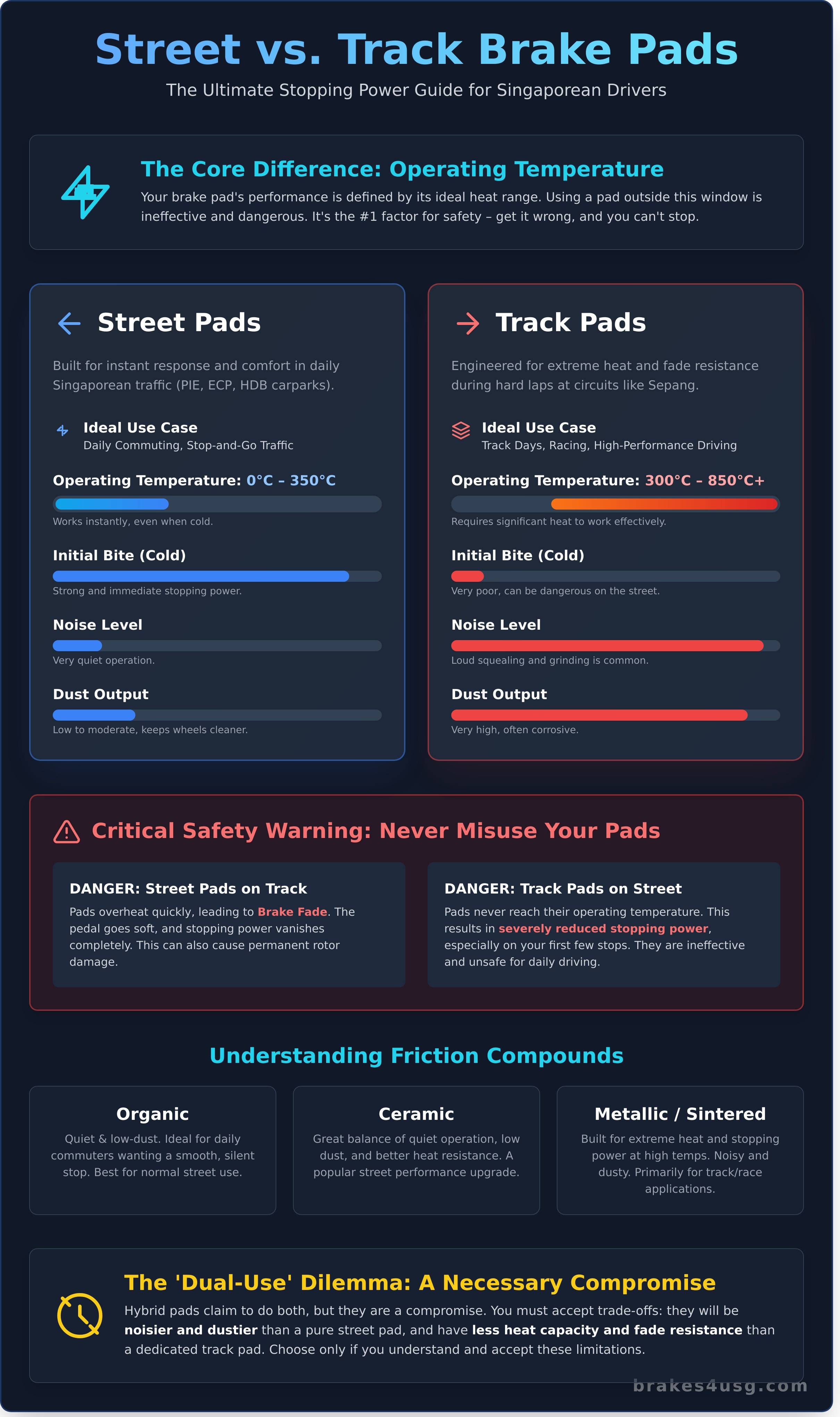
Your brakes do one job: turn your car's kinetic energy (speed) into thermal energy (heat). That’s it. The entire debate over street vs track brake pads boils down to one critical factor: the optimal operating temperature range.
Think of it like this: every brake pad has a temperature window where it performs best. A street pad is designed to work instantly, even on a cold morning. You need that immediate bite when you leave your HDB carpark or stop at a traffic light along the PIE. They are built for low-temperature, high-grip performance.
Track pads are a different beast entirely. They are useless when cold. In fact, they can be dangerous for daily driving because they need significant heat from repeated, hard braking just to start working effectively. Using a pad outside its intended heat range means you won’t have the stopping power you need, when you need it.
Friction Compounds Explained
The secret is in the mix. The materials baked into brake pads, known as the friction compound, determine how they handle heat, noise, and dust. There is no "one-size-fits-all" solution.
Organic: Quiet and low-dust. Great for daily commuters who want a smooth, silent stop.
Ceramic: A popular upgrade. Offers a good balance of quiet operation, low dust, and better heat resistance than organic pads.
Metallic/Sintered: Built for extreme heat. They offer incredible stopping power at high temperatures but are often noisy and produce a lot of dust. These are typically for performance applications.
What is Brake Fade?
Ever brake hard repeatedly and feel the pedal go soft? That’s brake fade. It’s a dangerous situation where the pads get so hot that the friction material breaks down and can no longer grip the rotor effectively. Your stopping power vanishes.
This is exactly what happens when you take street pads to a race track. They simply can’t handle the extreme temperatures of constant hard braking and will overheat quickly, leaving you with little to no braking ability. Understanding this is key to staying safe, whether on the street or the circuit.
Street Pads: Built for Daily Driving in Singapore
Your car isn't a race car. You drive on the PIE and ECP, not the Sepang Circuit. In Singapore's stop-and-go traffic, you need brakes that work instantly, every single time, even when they're cold. That is the exact job of a street brake pad.
The core difference in the street vs track brake pads debate is heat. Street pads are engineered for comfort, low noise, and a long life for your brake rotors. This saves you money and hassle. They are designed to be quiet and produce minimal brake dust, keeping your wheels clean. But even the best performance "street" pads have a clear temperature limit. Pushing them past this limit is a serious mistake.
Key Characteristics of Street Pads
For everyday driving, you need a pad that is practical and reliable. Street pads deliver exactly that. Here’s what defines them:
Strong Initial Bite: They provide immediate stopping power at low temperatures (under 300°C). Perfect for the first stoplight after leaving your HDB carpark.
Quieter Operation: Made from softer organic or ceramic compounds, they won't squeal or grind during your daily commute.
Low Dust Output: These pads are designed to keep your rims cleaner for longer, cutting down on the ugly black dust that’s a pain to wash off.
The Danger of Using Street Pads on Track
Let's be direct: do not use your daily street pads on a race track. This is a critical safety rule. At high speeds, they will overheat in just a few laps, leading to a dangerous condition called brake fade. Your brake pedal will feel spongy and your car won't slow down, no matter how hard you press it.
Even worse, the pad's binding material can melt and smear onto the rotor, causing violent vibrations and permanently damaging the rotor. This is why track driving demands purpose-built, high-temperature brake pads that can handle extreme punishment without failing. Using the wrong pads at the track isn't about performance-it's a major safety risk.
Track Pads: Engineered for Extreme Heat at Sepang
Track brake pads are not an "upgrade" for your street car. They are a specialised tool for a specific job: surviving the extreme heat of a race track like Sepang. Their one and only goal is to provide consistent, powerful braking without fading when temperatures hit a blistering 300°C to over 800°C. They are built to perform within a very specific operating temperature range, which is impossible to reach in normal Singapore traffic.
Unlike street pads, track pads absolutely require a 'bedding-in' process. This involves a series of controlled, hard stops to transfer a layer of friction material to the rotor. Without this, they simply won't work correctly. Need to learn how? Read our simple guide on How to Bed-In Your New Brakes.
Key Characteristics of Track Pads
If you're considering track pads, you need to know what you're getting into. They are designed for performance, not comfort or cost-savings. The key differences in the street vs track brake pads debate come down to these realities:
Extreme Friction When Hot: They bite hard and stop you fast, but only after they get very, very hot.
Very Loud: Loud, aggressive squealing is not a sign of a problem; it's a normal feature of how these pads work. Your neighbours will not be happy.
Aggressive and Dirty: The compounds produce heavy, dark brake dust that cakes onto your wheels. They are also highly abrasive and will wear out your brake rotors much faster, leading to more frequent and costly replacements.
The aggressive nature of track driving isn't just hard on the car; it's also physically demanding for the driver. Enduring high G-forces and heat in a race suit often leads to skin friction and chafing, a serious distraction when you need to be focused. To combat this, many enthusiasts use a specialized product like RG Anti Chafe Balm to stay comfortable and maintain concentration lap after lap.
The Danger of Using Track Pads on the Street
Putting track pads on your daily driver is a dangerous mistake. The #1 reason is simple: they have almost no 'cold bite'. This means when the brakes are at normal, everyday temperatures, their stopping power is weak, unpredictable, and dangerously low.
Imagine needing to make an emergency stop on the PIE during your morning commute. With track pads, you'll push the pedal and get very little response. By the time they generate enough heat to work, it’s too late. This lack of initial bite makes them a massive safety hazard in city traffic. Furthermore, using them cold doesn't just reduce stopping power; the abrasive compound can scrape and damage your rotors, costing you more money in the long run. For the street, there is no contest between street vs track brake pads - street pads are the only safe choice.
The 'Dual-Use' Dilemma: Choosing Your Compromise
You want one brake pad that does it all. Safe and quiet for the daily drive to work, but strong enough for a weekend blast or a track day at Sepang. This is the ultimate goal for many drivers, but the truth is simple: a true do-it-all pad doesn't exist. It's always a compromise.
This is where 'Performance Street' or 'Fast Road' pads come in. Think of brands like EBC Yellowstuff or Ferodo DS2500. They are a middle ground. They handle much more heat than your standard pads but aren't designed for the extreme abuse of a dedicated track session. They will have more dust and more noise than a stock pad. The debate over street vs track brake pads often leads people here, but you need to be honest about your driving style.
Decision Framework: What Kind of Driver Are You?
Cut through the noise. Find your driving style below to get a straight answer on what you need.
Scenario 1: The Daily Driver. You spend 99% of your time in Singapore traffic. Safety, low noise, and low dust are your priorities. Stick with a quality OEM-spec street pad. It's the most sensible and cost-effective choice.
Scenario 2: The Spirited Weekender. You enjoy a spirited drive and might do one or two track days a year for fun. A 'Performance Street' pad is your best compromise. It gives you a higher safety margin without the harshness of a full track pad.
Scenario 3: The Track Day Regular. If you're at the track multiple times a year, stop compromising. Your safety depends on it. Get a dedicated set of track pads and swap them in for track days. It's the only safe way to push your car hard.
Making the right choice for your car involves careful consideration of your needs—a skill that applies to many areas of life. For parents, making similar thoughtful decisions about their children's development is just as important. If you're looking to build essential soft skills for your child's future, you can check out SuperMinds.
Comparison Table: Street vs. Performance Street vs. Track
Here’s a no-nonsense breakdown. See where each pad type wins and loses.
Characteristic Street Pad Performance Street Pad Track Pad Cold Bite High Medium-High Low Max Temp Low Medium High Noise Level Low Medium High Dust Level Low Medium-High High Rotor Wear Low Medium High Price (per set) Low (S$80 - S$150) Medium (S$180 - S$300) High (S$350+)
Still not sure which compromise is right for you? The choice between street vs track brake pads is critical for your safety and wallet. Get a free, honest brake inspection from our specialists. We'll give you the right advice for your car, fast.
Get the Right Pads Fitted by Experts in Singapore
Understanding the difference between street vs track brake pads is the first step. The next, more critical step is getting them installed correctly. A premium brake pad is useless if it's fitted improperly. Bad installation leads to poor performance, premature wear, and serious safety risks on the road. Don't take that chance.
At Brakes4uSG, we don't just sell parts-we deliver stopping power you can trust. We are an authorised dealer in Singapore for world-class brands like Brembo and AP Racing. That means you get 100% genuine products, every time. Avoid the dangerous fakes and get guaranteed quality from the specialists.
Why Choose Brakes4uSG?
Choosing the right brake setup is more than just picking a brand. It's about matching the components to your car, your budget, and how you drive. Our job is to give you straightforward, no-nonsense advice so you get exactly what you need.
Expert Technicians: Our mechanics aren’t generalists. They are specialists in performance brake systems and understand the fine details of a proper, safe installation.
The Right Tools: We use professional-grade equipment to ensure every job is done to manufacturer specifications for maximum safety and performance.
Honest Consultation: We cut through the noise. Whether you're deciding between street vs track brake pads or need a full big brake kit, we give you clear recommendations without the upsell.
Book Your Brake Inspection
Still not sure what your car needs? Stop guessing. The best way to start is with a professional brake inspection. Our specialists will perform a thorough assessment of your current brake system, from pads and rotors to fluid and lines.
We’ll identify any issues and recommend the right upgrade path for your vehicle and driving habits. Get clarity and confidence in your car's stopping power. Stop guessing. Get expert advice at our Kaki Bukit workshop.
Your Final Stop: The Right Brakes for Your Drive
The debate over street vs track brake pads boils down to one simple factor: operating temperature. Street pads are designed for the stop-start traffic of Singapore's roads, working best from a cold start. Track pads need intense heat, like you'd find at Sepang, to perform safely. Using the wrong pad is a serious safety risk and a waste of your money.
Don't compromise on your safety. As the official Brembo Upgrade Dealer in Singapore and specialists in track and circuit preparation, we ensure you get the correct setup. We guarantee 100% genuine performance parts, fitted right the first time.
Still unsure? That's what we're here for. Talk to a specialist. Get the right brake pads for your car today.
Stop guessing. Drive with confidence.
Frequently Asked Questions
Can I use track brake pads for daily driving on the street?
No. We strongly advise against it. Track pads need high heat to work properly. In normal street driving, they stay too cold and won't provide safe stopping power in an emergency. They are also noisy, create a lot of dust, and will wear down your expensive brake rotors very quickly in stop-and-go traffic. For daily driving, always use street-spec pads for guaranteed safety and performance.
Are ceramic brake pads better for track or street use?
Ceramic pads are built for the street. They are the best choice for a quiet ride, low brake dust, and long rotor life, making them perfect for your daily commute. However, they cannot handle the extreme temperatures of a race track and will fade quickly, leading to dangerous brake loss. For track use, you need aggressive semi-metallic or race-compound pads that are designed for high heat.
How long do track brake pads last compared to street pads?
Street pads last much longer. A good set of street pads can last 40,000 to 80,000 km. Track pads are designed for maximum stopping power, not long life. They wear out extremely fast under the intense heat and pressure of track conditions. You might only get a few track days from a single set. They sacrifice longevity for pure performance when it counts.
What is the squealing noise from my performance brakes?
That squeal is usually normal for performance and track brake pads. The aggressive metallic compounds used in these pads vibrate at a high frequency against the rotor, which creates that noise. It's most common when the brakes are cold. While it can be annoying on the street, it’s often a sign that the pads are made from a high-performance material ready for the track.
Do I need to change my brake fluid when I switch to track pads?
Yes, absolutely. This is a critical safety step. Standard brake fluid will boil under the extreme heat generated during track use, causing complete brake failure. You must upgrade to a high-performance brake fluid with a higher boiling point (like a high-temp DOT 4). Always bleed your system with fresh, track-ready fluid before you hit the circuit. Don't take the risk.
Is a 'fast road' or 'performance street' pad a good compromise for track days?
A 'fast road' pad can be a decent compromise for very light track use. It offers better heat resistance than a standard pad. However, it is not a true track pad. For repeated laps or aggressive driving, it will still overheat and fade. The real difference in the street vs track brake pads debate is their heat capacity. For real safety and performance on the track, a dedicated track pad is always the best choice.
How much does it cost to swap between street and track pads?
If you have the tools and knowledge, you can save money by doing it yourself. If you bring your car to a workshop in Singapore, expect to pay for labour. A straightforward pad swap typically costs between S$60 to S$120 per axle. This price is just for the labour of swapping the pads and does not include the cost of the pads themselves or a brake fluid flush.
What's the best brake pad for a car driven daily in Singapore with occasional track use?
For daily driving in Singapore's city traffic, a quality street pad gives you the best comfort, low noise, and reliability. For those occasional track days in Malaysia, the safest option is to own two separate sets of pads: one for the street and one for the track. A hybrid 'fast road' pad is a compromise that won't be great at either job. Using the right pad for the right situation guarantees your safety.


Comments